Elecontro®'s pcb design concept keeps pace with the times, continuously optimizes its strong technical strength, and draws on various excellent manufacturing experiences, and finally manufactures high-quality oven controllers, timers and range hood controllers in accordance with international standards.
In general, about 90% of common interference from printed boards can be eliminated using the following basic anti-interference measures. Since the reliability of the hardware is a function of the complexity of the equipment, to eliminate some special and low probability interference, it is necessary to use a special and more complex hardware anti-interference circuit, so some hardware should be reasonably adopted according to the design conditions and target requirements. Anti-jamming measures to improve the anti-jamming capability of the system. As a professional supplier of oven controllers and timers and range hood controllers, Elecontro® has a strong R&D team. Headquartered in Wenzhou, and set up a research and development department in Hangzhou, the research and development team has reached 20 people. With rich experience in research and development, each product independently developed and manufactured has been verified by professional verification companies at home and abroad.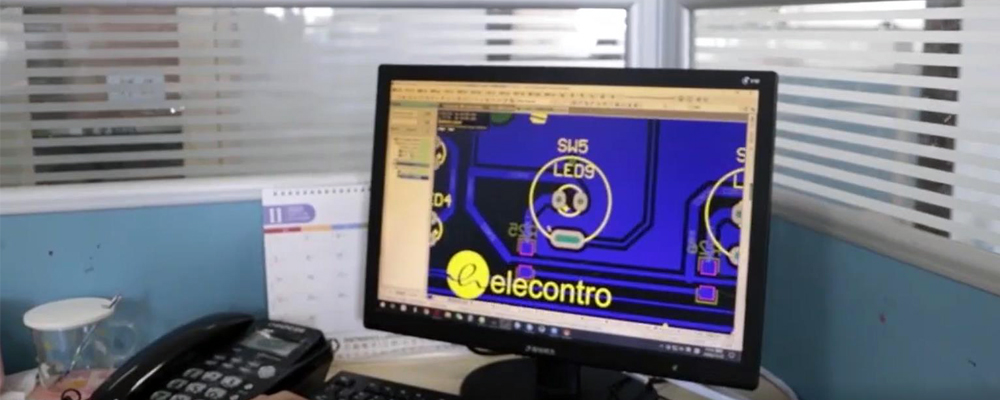
General Principles of PCB Design For optimum performance of electronic circuits, the following general principles should be followed:
1. The layout should be 1 to 1, and the size of the PCB should be considered first. When the PCB size is too large, the printed lines will be long, the impedance will increase, the anti-noise ability will decrease, and the cost will also increase; if the size is too small, the heat dissipation will be poor, and the adjacent lines will be easily interfered. After determining the size of the PCB, determine the location of the special components.
2. The wires used at the input and output terminals should avoid adjacent parallels as much as possible, and it is best to add a ground wire to avoid feedback coupling.
3. The min width of the printed wire is mainly determined by the adhesion strength between the wire and the insulating substrate and the value of the current flowing through them.
4. The bend of the printed wire is generally arc-shaped, and the right angle or the included angle will affect the electrical performance in high-frequency circuits.
Elecontro®'s pcb design concept keeps pace with the times, continuously optimizes its strong technical strength, and draws on various excellent manufacturing experiences, and finally manufactures high-quality oven controllers, timers and range hood controllers in accordance with international standards. Welcome to inquire!